Article 17 of Indian Constitution: Untouchability (Abolition of Untouchability).

Article 17 Untouchability (Abolition of Untouchability) – Constitution of India
“Untouchability” is abolished and its practice in any form is forbidden. The enforcement of any disability arising out of Untouchability” shall be an offence punishable in accordance with law.
Here’s a simplified explanation of Article 17 of the Constitution of India in easy words, along with a flowchart representation:
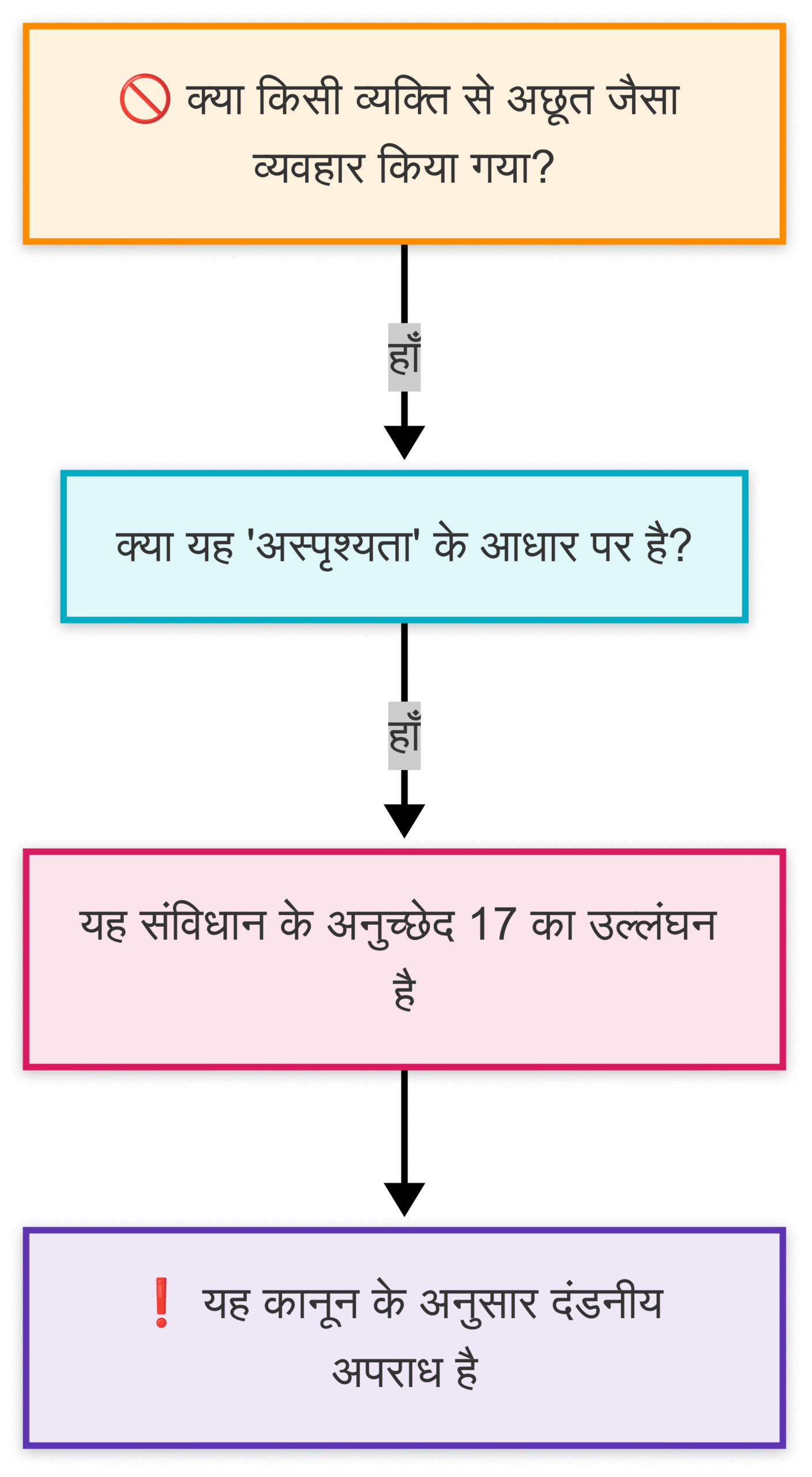
✅ Simple Explanation: Article 17 – Abolition of Untouchability
- What it says:
Untouchability is completely abolished in India.
Practising untouchability in any form is strictly prohibited.
Anyone who tries to enforce any kind of discrimination due to untouchability will be punished by law. - Key Points:
- Untouchability = Illegal
- No discrimination allowed
- Punishable offence
Based on the text provided, here is a list of frequently asked questions (FAQ):
Q1: What is Article 17 of the Indian Constitution about?
A: Article 17 of the Indian Constitution is about the abolition of “Untouchability”.
Q2: What is the status of untouchability in India according to this article?
A: “Untouchability” is completely abolished, and its practice in any form is forbidden and illegal.
Q3: What happens if someone tries to enforce discrimination based on untouchability?
A: Enforcing any disability or discrimination arising from untouchability is a punishable offense in accordance with the law.
Q4: What are the key points of Article 17?
A: The key points are:
- Untouchability is illegal.
- No discrimination is allowed.
- It is a punishable offense.